[This is the third of a three-part series on Egypt. The first speaks to its rich history and people. The second covers the engineering skills of ancient Egypt. This one is your practical survival guide in today’s Egypt.]
After two pieces on what Egypt was, it’s time to deal with what Egypt is — to a traveler arriving today, bags in hand, wallet at the ready, and patience already being tested. I am not going to tell you that Egypt is easy or comfortable. It’s not. But it’s absolutely worth it—if you go in with your eyes open and your expectations calibrated. I’ll try to prepare you as best I can for this incredible experience.
The Necessary Preparatory Work: Visa
The Egyptian eVisa is fairly straightforward. Don’t expect much help from either the consulate in LA or the embassy in Washington. It will arrive when it chooses to! Apply well in advance.
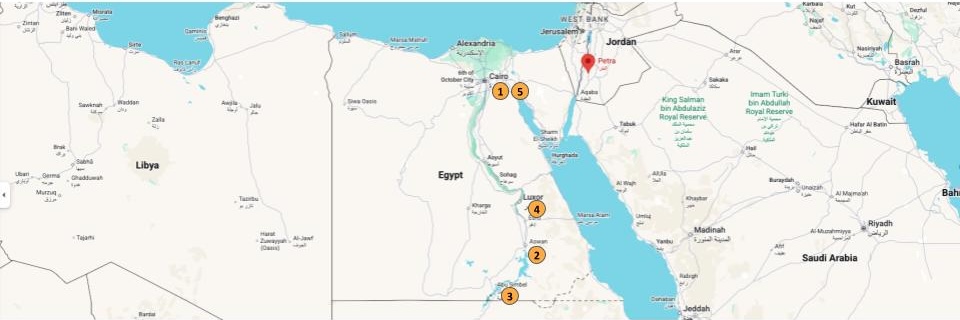
Our 8-Day Itinerary: Cairo, Aswan, Abu Simbel, Luxor, and Cairo
Let’s start by cutting to the chase. This is what eight days looks like when you’ve decided that efficiency is non-negotiable, every hour counts, and you will use the evenings to enjoy the hotel, the Nile, and get some rest.
Days 1-2: Cairo and Giza
- Giza Pyramids and Sphinx (early morning to beat crowds and heat)
- Saqqara and the Step Pyramid of Djoser
- Grand Egyptian Museum (opened November 2025—allow 6+ hours)
- Evening: Khan el-Khalili bazaar (quite the shopping experience; just avoid being drawn by questionable souls into the dark alleyways)
Day 3: Aswan
- Philae Temple (island temple relocated during dam construction)
- Aswan High Dam
- Elephantine Island
- Unfinished Obelisk (optional, shows ancient quarrying techniques)
- Nubian villages (optional, interesting cultural experience)
Day 4: Abu Simbel
- Early morning drive (3-4 hours from Aswan) or fly
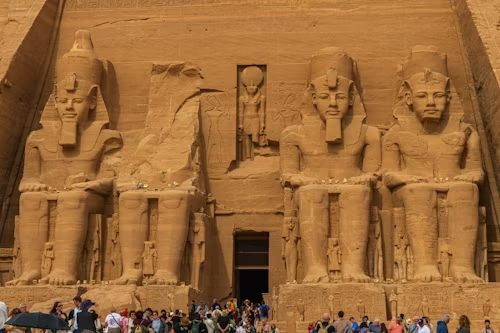
- Great Temple of Ramesses II and Small Temple of Nefertari
- Return to Aswan same day
Days 5-7: Luxor (Ancient Thebes)
- On the drive from Aswan to Luxor: Kom Ombo and Edfu
- East Bank: Karnak Temple Complex (morning, 3-4 hours minimum)
- East Bank: Luxor Temple (late afternoon/evening when it’s lit)
- West Bank: Valley of the Kings (early morning—gets very hot)
- West Bank: Hatshepsut’s Mortuary Temple
- West Bank: Valley of the Queens
- West Bank: Medinet Habu and Ramesseum
Day 8: Cairo
- Islamic and Coptic Cairo
- Heliopolis
- Mango juice (Abou Haidar restaurant in Heliopolis)
- A buffer day—for anything missed or to simply wander and explore
Alexandria in Egypt as well as Petra and Wadi Rum in Jordan were candidates that we didn’t have time for, unfortunately.
Flight Strategy: Maximizing Daylight Hours
If you looked at that itinerary and thought “they sure covered a lot of ground” — you’re right. As Type-A personalities, we optimized ruthlessly.
Both legs of the international journey followed the same logic: late evening departures from the US, arriving in Cairo the following afternoon, having slept on the plane and ready to go. On the return, late evening out of Cairo, home the next afternoon — not a useful hour wasted in either direction. There are no direct flights from California to Cairo, so we routed through Europe; a Gulf layover is the other viable option.
The same early-or-late philosophy governed travel within Egypt. Beat the heat, maximize site time, move when the tourists are still at breakfast or already at dinner. For domestic flights we used EgyptAir — not glamorous, but functional, well-connected, and it gets you there.
Where We Stayed — and One to Avoid
Accommodation choices matter more in Egypt than in most countries, because a good hotel is also your refuge from the heat, the noise, and the relentlessness of the street. We were happy with all three of ours: the Steigenberger Tahrir in Cairo (city center), the Mövenpick in Aswan (on an island in the middle of the Nile!), and the Steigenberger Nile Palace in Luxor (overlooking the Nile). All three were comfortable, well-located, and — critically — served food we trusted and enjoyed. In Egypt, that last point is not trivial.
One specific warning: avoid the Novotel Cairo Airport Hotel. If you are transiting through Cairo on arrival or departure and think a night there is convenient, think again. The convenience is not worth the poor upkeep and disinterested staff. Find another hotel in the vicinity.
Why We Skipped the Nile Cruise and Drove
Most tour packages include a 3-4 day Nile cruise between Luxor and Aswan. We skipped it. Here’s why: the cruise takes 3-4 days to cover what you can drive in 8 hours (including stops along the way). Yes, it’s romantic. Yes, you see temples from the water. But we didn’t come to Egypt to sit on a boat—we came to visit archaeological sites, meet the people, and enjoy the food.
Instead, we hired a private driver and guide most days (except for when we explored Cairo on our own using Uber rides to get us around). We drove from Aswan to Abu Simbel and back. We drove from Aswan to Luxor, stopping at both Kom Ombo and Edfu (just as the boats do). This gave us more flexibility, better sleep (no engine noise), safer food, and critically, more time at the sites. If you’re retired and have weeks to spend, a cruise might be lovely. For us, it was inefficient.
The driver driving us from Aswan to Luxor decided that he wanted to take side roads instead of the toll highway. (Don’t ask me why, because we communicated using sign language. And, there was no way I could pose such a sophisticated question to the gentleman!) So, we found ourselves making our way through small towns and villages along the Nile in the evening. Thanks to the lights in the homes, stores, and hangout areas along the way, we had a wonderful glimpse of the life of the common man in Egypt. Precious!
Note: We hired private drivers, cars, and guides with a friend’s help for our entire trip. Appears to cost more upfront but eliminates many headaches. Well worth it.
Navigating the Baksheesh Economy
Carry cash at all times, in small denominations, and carry more than you think you’ll need. You’ll tip your driver, your guide, the toilet attendant, the tomb custodian, the temple guard, the person who unlocks a door, the person who turns on a light, and — this is not an exaggeration — the person who does absolutely nothing except materialize beside you with an outstretched hand. It is exhausting and omnipresent, and no amount of mental preparation fully cushions the reality.
Add cameras to the list. Photography rules are inconsistently posted and inconsistently enforced, but the broad pattern is this: cameras are allowed in most places, flash is prohibited everywhere to protect ancient paintings, and some tombs ban photography altogether. If you have a DSLR, expect to pay both an official fee and a separate baksheesh to the guard who waves you through. Sometimes to two guards.
These tips aren’t greed — they’re survival in an economy where official salaries bear no relationship to the rapidly increasing cost of living. You can’t fix the system in a week. Budget for it, accept it, and try not to let it color every interaction — because the same people with their hands out will also go out of their way to make your visit memorable.
For reference, we spent a few thousand dollars on cars, drivers, and guides — and that was at a discounted rate, arranged through friends. The tradeoff was that we didn’t always have a professionally trained, English-fluent Egyptologist walking us through the nuances, and had to do more reading and interpreting on our own. Worth knowing before you decide how to structure your trip.
Critical Financial Tips: The ATM Situation
One way or another, you will be carrying wads of cash — and wads of low-value notes is really what it is. You can either load up before you go and walk around feeling like a nervous courier, or you can replenish periodically at ATMs. Neither option is without peril, but the ATMs deserve a special warning.
Egyptian ATMs are, and I say this with the benefit of hard experience, fricking nightmares. They reject foreign cards for reasons that are never explained and rarely consistent. When they do work, the fees swing wildly — a few percent at ABC Bank branches, all the way to 18% at hotel ATMs and tourist-area machines. That 18% is daylight robbery, and it is entirely avoidable.
Here is what we learned: bring more cash from home than you think you’ll need. Then double it. Then add 50%. Or, seek out ABC Bank ATMs specifically — they had (when we were there) the lowest fees and the highest acceptance rate for foreign cards. Notify your banks before you leave, plural, both credit and debit, and tell them explicitly that you’ll be in Egypt making withdrawals that may look unusual. A frozen card in Abu Simbel is not a problem you want to spend time solving.
Two things that surprised us: Egyptians are genuinely particular about the condition of foreign currency. Bring crisp, new bills — worn notes with small tears or excessive creasing will be turned away without apology. And stock up on small denominations before you leave home, because you’ll be reaching for (the equivalent of) 20 and 50 Egyptian pound notes constantly, and breaking a large bill to make change for baksheesh is its own small ordeal every single time.
Bribery: Acknowledge It Exists
We watched police officers take cash from drivers in broad daylight, in the middle of the street, with zero attempt at discretion. This isn’t hidden corruption—it’s institutionalized. Drivers budget for these ‘fees.’ Don’t be shocked. Don’t photograph it. Just understand this is part of the cost of doing business in Egypt.
Your guide and driver will handle these interactions. You just need to understand why your vehicle occasionally pulls over for mysterious exchanges with uniformed officials.
Dealing with Aggressive Vendors and Hustlers
Egyptian vendors are relentless. I say this as someone who genuinely respects entrepreneurship — the hustle here is impressive in its persistence and creativity. But the pressure crosses a line, and without a strategy you’ll spend half your trip fending off approaches instead of absorbing what you came to see.
A few things that helped us: don’t make eye contact if you’re not interested. Look through people, not at them. And don’t smile politely — in most cultures a pleasant expression is just courtesy, but here it reads as an opening. Neutral face, steady pace, keep moving. A firm “La, shukran” — No, thank you, in Arabic — works considerably better than English. It signals that you’re not a fresh target.
If someone presses a “gift” into your hands, refuse it before it lands. It is not a gift. The moment you accept it, you’ve entered a transaction on their terms, and the ask for payment follows immediately. And finally — bring sunglasses, and not just for the sun. They make avoiding eye contact considerably easier and give you a layer of useful anonymity in crowded spaces.
None of this is foolproof. But it helps.
Mastering the Bargaining Game
Since prices are never posted, everything is negotiable. Everything. Every purchase is a game of chicken, and the opening number a vendor names bears no relationship to what they’ll actually accept. Surekha, blessed with a Delhi upbringing, excels at this. I find it exhausting.
Our approach (a variant of the famous “Secretary problem”): visit three stores selling similar items, ask prices at each, make ridiculous lowball offers, watch their faces, and buy nothing. Their reaction gives you a feel for the floor. When you’re ready to buy, use your read of the situation — starting at 20-25% of their first ask is not a bad place to begin, and yes, that’s not a typo — because their starting prices are in the realm of pure fantasy. Be willing to walk away. This is the only move that actually matters. They will often chase you down the street and accept your price. And when they say “final price,” know that nothing is final until money changes hands.
Don’t feel guilty about any of this. They are still making a profit at the price you pay. The initial number exists solely to see what you’ll fall for.
On one occasion, Surekha negotiated an item from $800 down to $150. The seller (sitting in his opulent, air-conditioned showroom) expressed displeasure, said his family would die of starvation, but happily accepted the offer. That’s the game. If you’re not comfortable playing, either make your peace with paying inflated prices — or skip the shopping entirely.
That said, the one store that Surekha and Pooja took a liking to was one where there was zero pressure to buy, a ton of encouragement to explore the cavernous basement, and — if you are nice to them — possibly be gifted mangoes from their family garden. It’s Alladin’s Cave, and is directly across the street from the Steigenberger Nile Palace. Salah and his daughter Aya run the store. Salah, as a former officer in the Egyptian Army has traveled the world, and Aya speak English well and are wonderful ambassadors for Egypt. Tell them that Surekha and Pooja suggested that you visit. Maybe, just maybe, you’ll need to bargain less!
Tourist Traps to Avoid
We steered clear of anything where someone else controlled the meter — literally and figuratively. A few specific warnings earned through observation and the cautionary tales of fellow travelers:
The camel rides at the Pyramids are a notorious scam with a consistent script: you negotiate a price, mount the camel, and somewhere in the middle of the desert the owner stops and demands triple. You’re on a camel. You have no leverage. You pay. We heard of these cases and declined accordingly.
A few taxi drivers operate on a similar model — agree on a price, get in, and somewhere en route the price changes or the destination mysteriously shifts. Use Uber in Cairo, where the fare is fixed before you move an inch. Outside Cairo, stick to your hired driver.
Feluccas — the traditional wooden sailboats on the Nile — are genuinely lovely, and we don’t want to put you off the experience entirely. But establish the price, duration, and route in writing before anyone unties the rope. Better yet, pay a small premium and have your hotel arrange it. The peace of mind is worth more than the few dollars you’d save negotiating on the dock.
And finally: the papyrus “museums.” They are not museums. They are shops with a thin educational veneer and very persistent staff. Skip them entirely — or if curiosity gets the better of you, leave your wallet at the hotel.
Miscellaneous Practical Tips
- Heat management: November is pleasant — 70-80°F days, cool evenings — but don’t be fooled like I was. The sun is relentless, the desert radiates heat, the tombs will kill you, and by midday you’ll wonder why anyone ever settled here voluntarily. I can’t imagine what summer is like, and I have no intention of finding out. Visit during October to April and plan your outdoor visits for early morning.
- Hydration: Carry water everywhere. It’s dry. The desert doesn’t care how confident you are.
- Electrolytes: Carry electrolyte tablets. The heat sneaks up on you, and a tablet dissolved in water is the difference between bouncing back in 20 minutes and losing half a day.
- Dress code: Modest clothing is non-negotiable in places like mosques and conservative areas. Women: cover shoulders and knees minimum. Men: wear long pants. Check before you go, because there’s nothing quite like being turned away at the entrance to Karnak because you wore shorts.
- Shoes: You’ll walk miles on uneven ancient stones, worn down by 4000 years of feet. Wear your most supportive hiking boots or sneakers. Your ankles will thank you.
- Food: Bottled water only—no exceptions, no ice. Avoid raw vegetables unless you’re in high-end hotels. The Abou Haidar mango just about made it because of the volume that they are processing every hour. Cooked food is generally safe and, honestly, the food in the hotels we stayed at was extremely good. Egypt matched most hotels of this caliber worldwide.
- Traffic: Chaotic in a way that is reminiscent of India. Chinese BYDs rule the roads. Do not attempt to drive yourself, for you know not what will roll over you. Trust in God and your driver. Close your eyes if needed.
- WiFi: We are big time T-Mobile zealots. So, we simply used our phones as we would at home in the US. For international calls, we used Google Voice or WhatsApp. If your phone carrier doesn’t offer affordable international roaming packages, grab a local SIM card at the airport. Hotel WiFi is ok, but not great.
- Travel insurance: We didn’t do anything exotic here — just paid using our Chase Sapphire Preferred card for the built-in coverage and confirmed that our US health insurance would repatriate us in a genuine emergency. Hopefully, you won’t need any of this.
What We Loved
Despite all the warnings and frustrations, Egypt delivered experiences we’ll carry for a long time.
Standing inside the Grand Pyramid and touching stones that were already 2,000 years old when Caesar visited Egypt — that stops you cold. Watching the sun rise over the Valley of the Kings reminded us why we travel in the first place. Walking through Karnak’s Hypostyle Hall — 134 columns, the tallest rising seven stories above you — you don’t just see the scale, you feel it. And Abu Simbel, after a bleary 4 AM departure from Aswan, rewarded us with a sight that no photograph has ever done justice. You simply have to be there.
Six hours in the Grand Egyptian Museum left us mentally spent and me physically passed out on a bench — my kids tell me a couple on the adjacent bench was watching over me, wondering whether to call the local 911! Despite that, we loved every minute of it. Decades after reading about King Tut in National Geographic and hearing my father describe seeing his golden mask in Seattle in the mid-1970s, finally being in the same room was something else entirely. We were lucky to be in the GEM just a few weeks after it opened after many delays.
And then there are the Egyptians themselves. For all the hustling and the baksheesh and the relentless vendor pressure, the genuine warmth was never far away. Much like India, hospitality here is a point of pride — a ‘no’ is taken personally because they truly want you to have a good time. We encountered that warmth repeatedly, from the guide who spent an extra hour explaining a tomb he clearly loved, to Michael pointing us to incredibly good mango juice at Abou Haidar in Heliopolis.
Final Recommendations
Should you go? Absolutely. Egypt is unlike anywhere else on earth, and no amount of reading — including these three posts — will prepare you for the actual experience of standing before monuments that were ancient when the Roman Empire was young.
Will it be easy? No. Expect heat, crowds, persistent vendors, confusing pricing, and the occasional moment where you seriously question your life choices. The ATMs alone could break a lesser traveler.
Is it worth it? Without question. Surekha and I come from a culture where history measured in thousands of years feels normal — we thought we were prepared. We weren’t. Egypt operates on a different scale entirely, and that humbling is precisely the point.
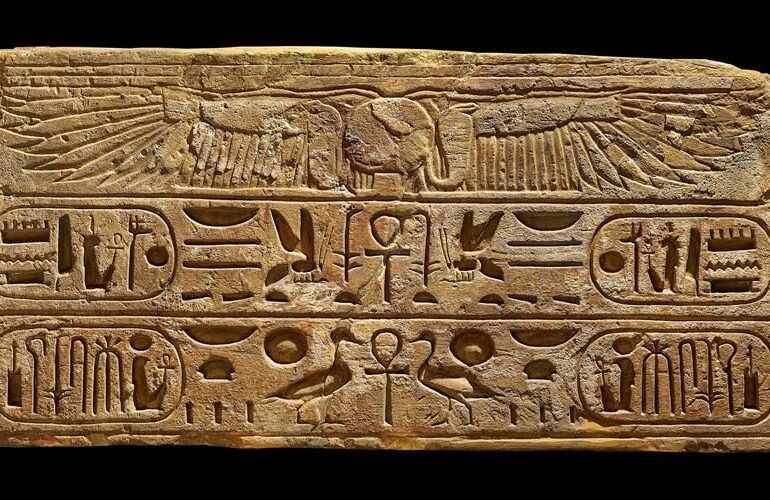
Go with realistic expectations. Budget generously — then add more. Hire good guides when you can. Stay hydrated. Practice your bargaining face in the mirror before you leave. And set aside at least one quiet moment, away from the tour groups and the vendors and the heat, to simply sit with what you’re looking at. A 4,600-year-old stone. A hieroglyph carved before the wheel was in common use. A temple aligned to the stars with an accuracy that still impresses modern engineers.
Those moments are why you came. Egypt will make you work for them. It’s worth every bit of the effort.
A BIG thanks to the Elabd-Hany family, without whom this trip would have been a fraction of what it was. And to the Iyers who kindly shared their travel notes with us.